Share


The way people view banking has changed dramatically over the years. What was once closely associated with long queues, fixed banking hours, and trips to physical branches has gradually evolved into something far more accessible and convenient. With the rise of digital banking platforms, many everyday financial tasks, from transferring money to paying bills and growing one’s savings, can now be done directly from a smartphone through a user-friendly digital banking app. And with the growing list of digital banks available today, it’s also easier than ever to find a reliable financial institution that suits your financial needs and lifestyle.
Still, despite the growing popularity of digibanks, some people remain hesitant to fully embrace them, often because the concept feels unfamiliar compared to the long-established presence of traditional banks. This hesitation is understandable, especially since one’s hard-earned money is involved. However, understanding what digital banks actually offer and how they improve on many aspects of conventional banking can help clarify their advantages.
With that in mind, let’s take a closer look at some of the major differences between digital and traditional banks and how each can benefit you.
1. Account Opening Process
One of the biggest differences between digital banks and traditional banks lies in how accounts are opened. Traditional banks often require customers to visit a branch and complete paperwork before gaining access to banking products. While some banks have introduced online features to streamline the process, opening an account can still involve extra steps that may take time and planning. Digital banks, by contrast, are designed to remove all of these hurdles by allowing users to complete the process entirely online.
As the #1 digital bank in the Philippines, Maya aims to make account opening as easy and hassle-free as possible. With an upgraded Maya account and just one valid ID, users can already begin exploring Maya’s savings products. By lowering the barrier to entry, Maya has become a top digital bank for people who want a more convenient way to begin their online banking journey, especially those who prefer a mobile-first approach to managing their finances.
2. Interest Rates on Savings
Another major difference is the interest rate offered on savings accounts. Traditional banks typically provide dismal returns on deposits, which are almost always outpaced by inflation. Digital banks, however, frequently position themselves as stronger alternatives for savers by offering more competitive rates and flexible products designed to reward active account use.
Offering better ways to make your money work harder for you is exactly what Maya aims to do. Maya Savings, for instance, is a high-interest savings account that lets users earn a base rate of 3% p.a., which is already much higher than what many traditional banks provide. The best part is that this can be boosted up to 15% for deposit balances of up to PHP 100,000 simply by using Maya services for everyday transactions, such as buying mobile load, paying bills, transacting with QR Ph, borrowing via Maya Easy Credit, using a Maya Card, or paying online with Maya. Meanwhile, users who are comfortable locking in their funds for higher returns may appreciate Maya Time Deposit Plus, which starts with a guaranteed 3% p.a. interest rate and can increase depending on the chosen term: 5% for 3 months, 6% for 6 months, or 5.5% for 12 months.
Moreover, since Maya is a Bangko Sentral ng Pilipinas-supervised financial institution (BSFI), with deposits insured by the Philippine Deposit Insurance Corporation (PDIC) up to PHP 1 million per depositor, it provides added assurance that your money is safe. With higher interest tiers and oversight from trusted institutions, it’s no wonder Maya is the online digital banking go-to for those looking for a balance of attractive returns and financial security.
3. Accessibility and Convenience
Traditional banks offer the advantage of physical branches, which can be reassuring for customers who prefer in-person service or need assistance with more complex concerns. However, branch visits can also mean dealing with travel time, queues, and limited operating hours. Digital banks are built around accessibility, allowing users to manage finances anytime and almost anywhere through a mobile app.
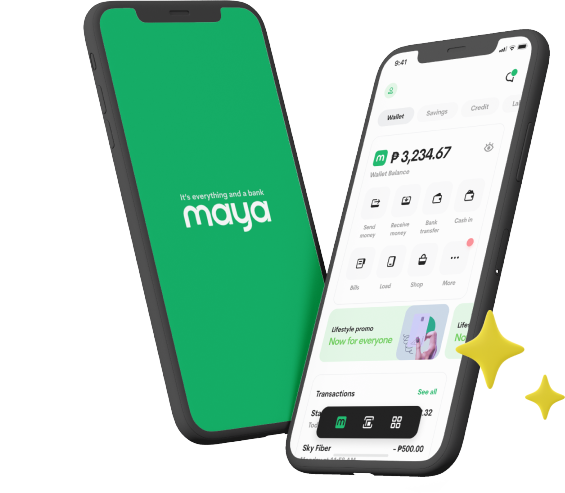
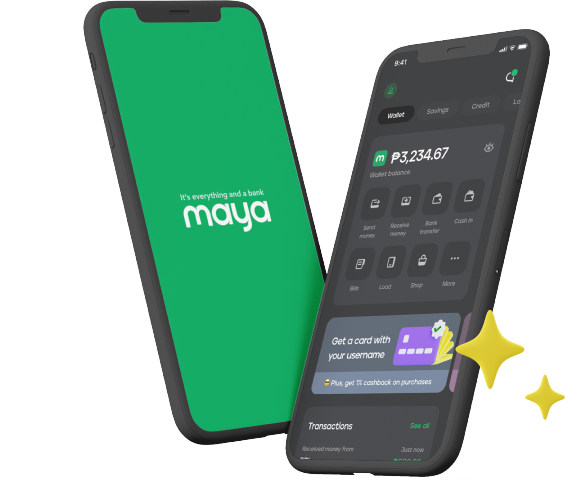
Choosing Maya as your bank, for example, allows you to handle all your transactions through the Maya app. Whether transferring money into savings, paying bills, monitoring your savings progress, or reviewing transactions, everything is organized within an easy-to-use interface. Helpful control features such as transfer limits and strong security measures, including default two-factor authentication, also add an extra layer of protection, offering peace of mind in a time when cybercrimes are increasingly common. For people looking for a reliable commercial bank, digital banking can feel just as seamless when supported by an all-in-one platform like Maya.
4. Connectivity and Money Transfers
Moving money conveniently is another area where digital banks and traditional banks often differ. While traditional banks have steadily improved their digital services, some transactions may still feel slower or involve additional fees depending on the institution. Digital banks tend to prioritize seamless connectivity, making it easier to move money between accounts, e-wallets, and payment platforms without unnecessary friction.
Maya is a strong example of this convenience in practice. The platform supports both InstaPay and PESONet transfers, which makes it more convenient to send funds to other banks or receive payments when needed. Whether splitting bills with friends, transferring allowance to family members, or moving money into savings, strong connectivity makes managing everyday finances faster and more flexible.
5. Financial Management and Goal-Setting Tools
Traditional banks are primarily designed to help customers store and access money, though some now include budgeting features through their digital platforms. Digital banks, however, often place a stronger focus on helping users actively manage their financial goals through built-in tools that encourage saving habits and better financial planning.
Maya Personal Goals is one savings tool that reflects this approach. It allows users to create up to five goal accounts at a time, and each Maya Personal Goals account earns up to 8% p.a. on balances of up to PHP 100,000, with tiered interest rates that start at 4% p.a. for the first PHP 20,000 and gradually increase up to 8% p.a. for amounts above PHP 80,000. Needless to say, this helps users reach their savings targets faster, and compared
to simply storing money in a general savings account at a traditional bank, having dedicated goals with visible progress can make saving feel more purposeful and motivating.
6. Cash Deposits and Withdrawals
Traditional banks have long held an advantage when it comes to handling physical cash. Depositing and withdrawing funds is often straightforward through branch counters or ATMs, making them a practical choice for people who regularly deal with cash transactions. Because digital banks operate primarily online, some people assume that accessing cash may be less convenient.
In Maya’s case, however, this limitation is less of a concern. With a Maya Card, you can withdraw cash from any ATM that accepts Visa or Mastercard. All you need to do is transfer funds from your savings account into your Maya Wallet before withdrawal, making money just as accessible physically as it is digitally. This flexibility helps bridge the gap between digital convenience and everyday cash needs.
7. Customer Support Experience
Customer support is another important difference between traditional and digital banks. Traditional banks offer face-to-face assistance through branch staff, which many customers still find reassuring when resolving sensitive issues or asking detailed questions. The personal interaction can be especially valuable for complicated transactions or concerns that require more guidance.
Digital banks, meanwhile, focus on providing support through online channels that are accessible anytime. For instance, Maya offers 24/7 assistance through its Help Center, which users can access directly within the Maya app. This allows customers to find answers, resolve concerns, or seek help without needing to wait for branch hours, adding another layer of convenience for people who prefer managing their finances on their own schedule.
Choosing the Right Bank for Your Needs
Overall, both digital and traditional banks play important roles in today’s financial landscape, each offering distinct advantages depending on your needs and preferences. While traditional banks continue to provide familiarity and in-person services, digital banks like Maya highlight how everyday banking can be made more accessible and convenient through technology. Some may even find value in using both options. Ultimately, the best choice comes down to how you manage your money and which banking experience best supports your financial goals.
You might also like
These Stories on Digital Bank


4 min read
Jun 18, 2026, 12:59:59 PM |

It’s everything and a bank. What more could you need?
For existing PayMaya users, update your app to Maya